Brand Guidelines People Actually Open
An 80-page PDF can be finished and still lose to the next deck. People open one page of rules, a file that lives where they work, a picture of the wrong use, and a named owner.
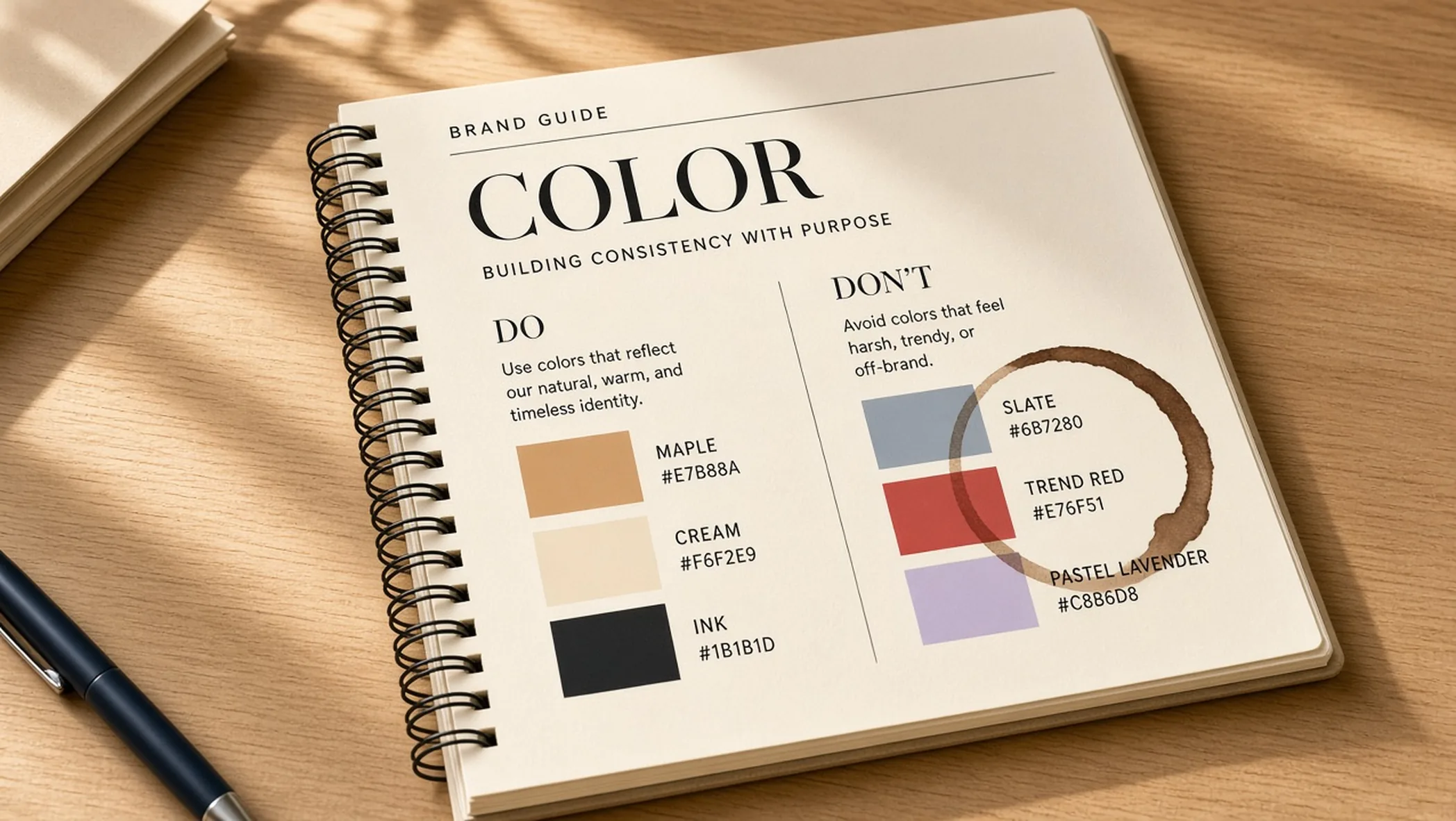
The guidelines PDF is finished. The next sales deck still uses a random blue and a stretched mark. People did not reject the brand. They never opened the file. Guidelines that get used are short enough to check before send, stored in the tool where the work already happens, illustrated with one correct use and one wrong use, and owned by a person with a name.
Color, type, and tokens live in scalable visual identity systems. How those values become components is design systems, from brand to code. A break you allow on purpose goes in the brand exception log. Why a logo file is not a system is why corporate brands require a system. If the live work already disagrees with itself, start with the brand audit before you write a longer PDF.
What open means
Open means someone checks the rules in the ten minutes before a deck, an ad, or a proposal goes out. It does not mean they attended a launch meeting in January and felt aligned. If the only time the file is opened is onboarding, it is a souvenir. The test is the next three things you ship, not the applause in the kickoff.
Failure mode: the PDF is finished and the next deck ignores it. The usual causes are dull and fixable. The file is too long to search. The real logo lives in a chat export. There is no picture of the wrong use, so "do not stretch" is a sentence people nod at. Nobody is named, so a freelancer guesses. The rules on page 40 disagree with the live site, so the site wins. Adding pages does not fix any of those.
Four pieces, and what each is for
| Piece | What it holds | If it is missing |
|---|---|---|
| One-pager | Non-negotiables a person can check in two minutes | They invent a color and a lockup |
| File home | Current logo, templates, and crops in the tool they use | They reuse the deck from last year |
| Right and wrong | One correct example and one incorrect example per broken rule | They nod and stretch the mark |
| Named owner | A person who answers can-I this week | Marketing means nobody |
| Dated break | A row in the exception log with an expiry | Just this once becomes the look |
Read the right column as the forecast. You do not need a research panel. Ship three decks with one piece missing and you will see that cell. The work is to close the cell, not to write a preface about brand love.
The one page of non-negotiables
The one-pager is the only page most people will read. Write it as a check, not as an essay. If a line needs a chapter, it is not ready for this page. Point to the library for files. Point to the voice guide for the long examples. This page says what must be true before send.
- Name and lockup: which version, how it sits with a partner mark, and the one clear-space rule in a sentence. Link the file. Do not redraw it in the PDF and hope it matches.
- Color: the few they may use, and the one they may not invent. Hex codes can live with the tokens. The one-pager says the roles: background, ink, accent. A person making a deck does not need a 40-swatch theory page.
- Type: one family for headlines, one for body, and what not to substitute when the font is missing. "Use something similar" is how you get a different brand by Friday.
- Voice, short: three lines you say, three lines you do not. The full voice system stays in the voice guide. Do not paste it here and call the guidelines complete.
- Claims: what you may show, and the claims that are forbidden. Empty proof stays empty. The one-pager is a good place to stop a freelancer from inventing a result.
Date the page. A one-pager from 2019 that still says Final will lose to whatever the website did last month. The owner updates the date when a non-negotiable changes. If the date is older than the site, the site is the real guideline and the PDF is a prop.
A place files actually live
People follow the path of least resistance. If the template is three folders deep and the old deck is on the desktop, the old deck ships. Put the master where the work is made. Slide tool, doc template, proposal shell, social frame. One link from the one-pager. Archive the previous file so it cannot be "the one I know works."
Do not keep the hex codes in three essays. The token set is the source for values that design and code share. The guidelines page tells a human which role to use and where the template is. When those disagree, pick a source and delete the duplicate. Two sources of white is how you get two whites.
This is not the component library. Components are how engineering assembles the product. A sales lead who never opens the repo still needs a template. If you only invest in code, the proposal will drift. If you only invest in a PDF, the product will drift. The adoption job is the human side. The token job and the component job stay in their own articles. Link them. Do not merge them into an 80-page compromise nobody finishes.
Correct, incorrect, and a named owner
Show one right and one wrong for each rule people already break. A stretched mark next to a correct mark teaches faster than a paragraph. A deck cover with the accent used as body text, next to a cover that keeps ink for text, teaches faster than a contrast lecture. Keep the pair small. A gallery of forty bad posters trains people to close the file. Three pairs, chosen from the last audit, are enough.
Name the owner on the page. Not a team. A person who can say yes, no, or "put it in the log" this week. Commenters can be listed. Veto is one name. If that person is also the approver on the brief, say so, so nobody hunts for a second committee. If they delegate, write the delegate and the rule for when the delegate must escalate. "Ask marketing" is an invitation to guess.
The owner job is small if the page is short. They keep the date current, they answer the odd request, and they send breaks to the exception log. They are not a help desk for taste. "I prefer a rounder logo" is not a ticket. "The booth vendor template cannot hold the lockup, and the event is on this date" is a ticket. The second one gets a row, a surface, and an expiry. The first one gets a no.
Thirty days to make it the path of least resistance
- Week 1: Write the one-pager from rules you already decided. Do not invent a new strategy in the guidelines file. If the who-line is missing, you are in the wrong document.
- Week 2: Move the live templates into the tool people use. Delete or archive the duplicate folder. Send one link. If two links exist, you still have the old problem.
- Week 3: Add one correct and one incorrect example for the three rules the last decks broke. Pull the wrong example from a real file you shipped. Blurry stock posters teach nothing about your mark.
- Week 4: Put the owner name and the date on the page. Tell the people who ship decks. Watch the next three. If they miss, the page is unclear or the file is hidden. Rewrite the page. Do not add forty pages as a patch.
After day 30, the measure is boring: did the last three public pieces use the template, the lockup, and the color roles? If yes, the guidelines are open, even if nobody praises them. If no, find which piece from the table was missing. Page count is not the measure.
Hypothetical, labeled
Hypothetical. A four-person consultancy has a 64-page brand PDF in a shared drive. Sales builds decks in a slide tool on a theme from two years ago. Nobody is named as owner. The founder writes a one-pager: wordmark, two color roles, one type pair, three voice lines, one forbidden claim. The correct and incorrect pair is their own logo, clear-space versus stretched. The master theme replaces the old theme in the slide tool. The founder is the owner, named on the page, dated this month. The next proposal uses the theme because it was already open, not because anyone reread page 51.
What that example does not prove: that every firm should live in slides, or that a one-pager replaces tokens in a product. It shows adoption is a file location, a picture of the mistake, and a name. The 64 pages can stay in the archive. They are not the guideline people open.
If the one-pager is ready and the files still live in five folders, the next step is operational, not a new logo. That cleanup is part of branding when you want someone to hold the owner role with you. Contact when the PDF exists and the decks ignore it.
Frequently asked questions
How long should brand guidelines be if people are going to use them?
One page of non-negotiables is the page most people will read. The file library can be larger: logo files, templates, crops. An 80-page PDF that tries to be both the rules and the archive gets closed. Put the rules on the page. Put the files where the deck is made.
Where should the brand files live?
In the tool people already use to ship the work. If sales builds decks in one slide tool, the template lives there, not in a folder named Final_v7. One link, current files, old files archived. A second copy in email will win, and it will be the wrong version.
Who should own the guidelines?
One named person who can answer "can I" this week. A department is not an owner. The brand brief already asks for one approver. The guidelines owner can be that person or a delegate who can reach them the same day.
How is this different from design tokens or a design system?
Tokens name the values (color, type, space) so design and code can share them. A design system turns those values into components. Guidelines are the human rules and the files a person opens before they send a deck. You need the rules even when nobody on the team writes code.
What do we do when a team needs to break a rule?
Write it in the exception log: reason, surface, expiry, and the person who removes it. A break with no date is not an exception. It is a new rule, or it is drift. Do not hide the break in a chat message.