Brand Audit Checklist: How to Find Identity Drift Across Every Touchpoint
A logo file is not a brand. Walk the website, proposals, social, packaging, and sales decks with the same four scores: consistency, clarity, usability, and governance. Then decide whether you have drift or a real identity problem.
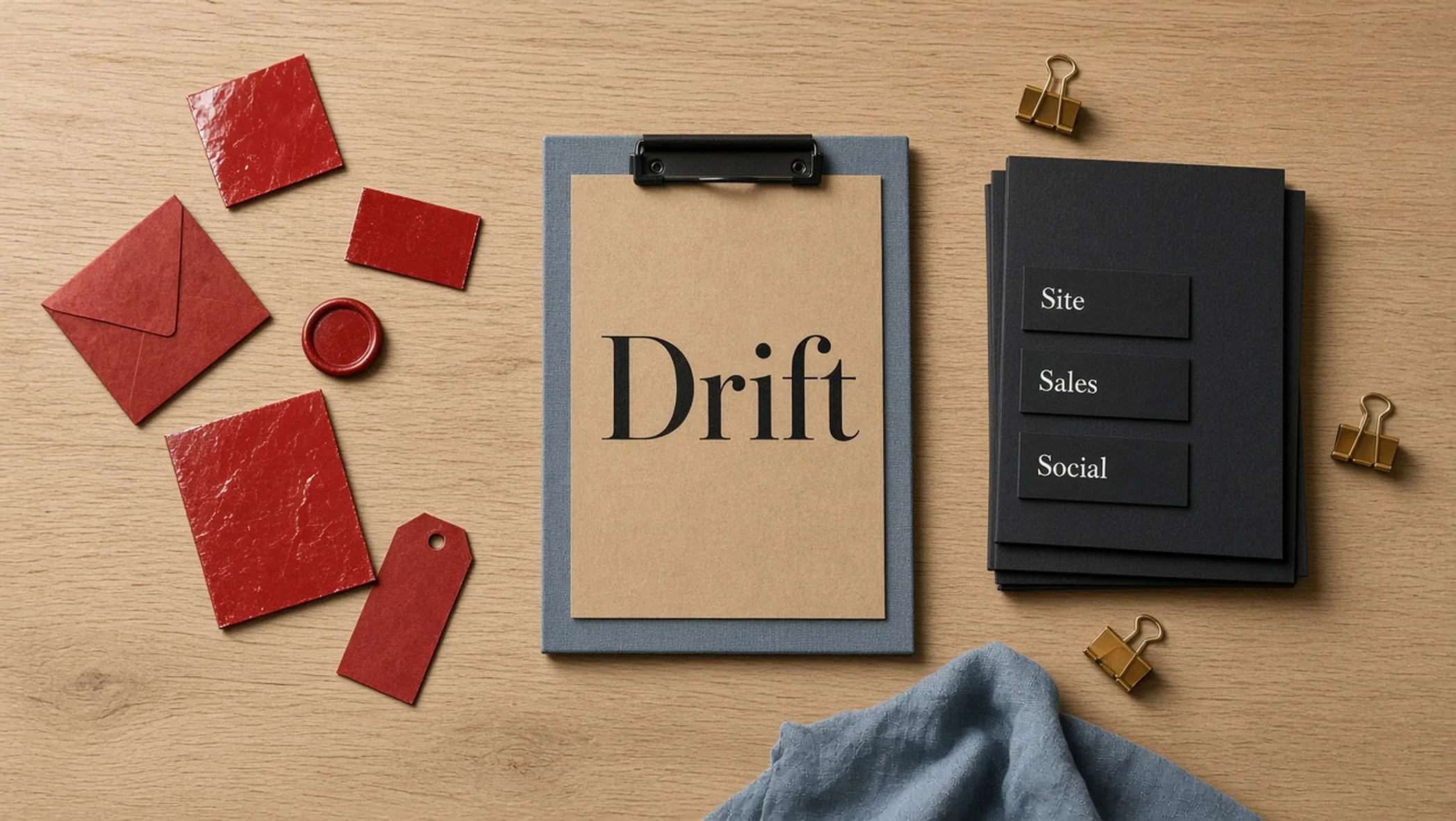
Most companies do not have a brand problem. They have six versions of the brand. The website says one offer. The proposal says another. Instagram uses a color that is not in the file. The sales deck still has last year’s name for the service. That is identity drift. An audit is how you see it in one sitting instead of arguing about the logo.
Read this after the cornerstone on why a corporate brand needs a system, not just a logo. If the audit says the position itself is wrong, go to the positioning framework. If the system is fine and you need to start work, use the branding kickoff.
Four scores, not a vibe
Score each touchpoint 1 to 5. Write the evidence on the same row. “It feels off” is not a score.
| Score | Question | 1 means | 5 means |
|---|---|---|---|
| Consistency | Does this match the system? | Different name, color, or logo file | Same tokens, same naming, same lockup |
| Clarity | Can a stranger say what you do? | Slogan fog, five offers in the hero | One job, one proof, one next step |
| Usability | Can a vendor actually use this? | A JPEG in a WhatsApp chat | Files, templates, and rules they can open |
| Governance | Who can change it, and did they? | Anyone with Canva | Named owner, exception log, last review date |
The touchpoint list (sample, do not boil the ocean)
You are looking for collisions, not a complete museum. Pull one recent example of each. If a channel does not exist, skip it. Do not invent a packaging line so the spreadsheet looks full.
- Website: home hero, one service page, contact. Screenshot the H1, the colors, the logo file in the header.
- Sales: last three proposals or decks. Note the name of the offer, the proof block, and whether the cover matches the site.
- Social: last ten posts on the channel you actually use. Avatar, name, and the first line of bio count.
- Email: the signature, the newsletter header, the from-name. These drift first because nobody owns them.
- Physical: signage, packaging, print if you have it. One photo each. Skip if you are digital-only.
- Product UI: app or customer portal if it exists. A marketing site that does not match the logged-in product is a trust tax.
If the website is the messiest surface, you already know the next build will fight the identity unless you fix the system first. That is a branding problem that will show up as a website planning problem later.
How to score without pretending to be a lab
Two people score separately, then compare. If you are alone, score once, wait an hour, score the worst three rows again. You are not producing academic reliability. You are producing a list you can brief.
- Dump the samples into one folder named with the date. Do not audit from memory or from “I think the deck is fine.”
- Write the official name, the official color values, and the official offer line at the top of the sheet. If those do not exist, that is already the finding.
- Score each sample on the four axes. Add one evidence note: “hero says digital agency, proposal says design studio.”
- Tag each low score as drift (execution) or strategy (the official line is wrong). This tag decides the next step.
Usability often fails even when the mark is pretty. If vendors cannot find SVG, print, and social crops, they will make a PNG on a phone. The file hygiene belongs in a visual identity system, not in a new concept.
Filled hypothetical: a four-person studio
Hypothetical, labeled as such. A studio sells websites and identity. The site hero says “creative partners.” The proposal cover says “web development.” Instagram uses a lime that is not in the brand folder. Email signatures still show a 2023 lockup. There is no named approver.
| Touchpoint | Consistency | Clarity | Usability | Governance | Tag |
|---|---|---|---|---|---|
| Website hero | 3 | 2 | 4 | 2 | Strategy + drift |
| Proposal cover | 2 | 3 | 2 | 1 | Drift |
| Instagram avatar | 2 | 3 | 1 | 1 | Drift |
| Email signature | 1 | 3 | 2 | 1 | Drift |
| Brand folder | 4 | n/a | 2 | 2 | Usability |
The honest next step in that hypothetical is not a new icon. It is: lock one offer line, replace the lime, ship a signature template, name an approver. A rebrand would be the wrong spend until those rows move. If the hero cannot name a buyer after that cleanup, then you have a positioning job.
What to do with the scores
- Do nothing yet: scores are mostly 4s, and the business has not changed who it sells to. Schedule a quarterly drift check. Do not buy a project so the audit feels expensive enough.
- Refresh: the system exists, execution drifted. Templates, file hygiene, voice examples, one homepage pass. Kickoff is a working session, not a blank-page identity.
- Rebrief: clarity is low because the official story is wrong, or the company merged, or the offer changed. Stop polishing. Write a brand brief. That is a different article. Do not start in Figma.
Governance is the cheap fix everyone skips. A one-page rule (who approves what, where files live, what happens when a vendor needs an exception) will do more than a new color. Voice rules belong in the messaging system. Component rules belong in brand to code once the identity is stable enough to implement.
What this audit does not prove
A high consistency score is not proof that customers like you. A low score is not proof that a rebrand will grow revenue. The audit shows whether the company is presenting one identity. Commercial outcomes need a baseline and a time window. Do not staple a percentage to this checklist.
If you want a second pair of eyes on the folder and the homepage, start a branding conversation. Bring the samples. Leave the mood board at home until the scores exist.
Frequently asked questions
What is identity drift?
Identity drift is what happens when each team or vendor ships a slightly different version of the brand: a new green, a new headline pattern, a new icon style, a new way of naming the offer. No single piece is a scandal. Together they make the company look like five companies. An audit finds that pattern before you pay for a full rebrand you may not need.
Is a brand audit the same as a rebrand?
No. An audit is diagnosis. A refresh is tightening the system you already have. A rebrand is a new positioning, a new verbal system, or a new visual system because the current one cannot carry the business. Do the audit first. Many “rebrand” requests are drift plus a tired homepage.
How long should a small-team brand audit take?
A working pass is one focused day plus a half-day to score and write the gaps. You are sampling touchpoints, not photographing the entire internet. If you need six weeks, you are running a research project. Say so. Do not hide it inside an audit.
What do I need before I start?
The current logo files, the live website, the last three proposals or decks, the last ten social posts, and the name of whoever can actually approve a change. If nobody can approve, the audit will become a slide nobody owns.
Can we audit without customer interviews?
Yes, for drift. Consistency, file hygiene, and mixed messages are visible without a research budget. Interviews matter when you are deciding whether the positioning is wrong, not whether the Instagram grid uses three different blues. Do not skip interviews if the business has changed who it sells to.
What should the output be?
A scored grid, a short list of drift versus strategy problems, and one recommended next step: do nothing yet, refresh, or brief a rebrand. A 60-page PDF with no decision is a stall.