The Brand Exception Log: Who May Break the System, and for How Long
Someone will ask to break the system for one deck or one ad. Without a reason, a surface, an expiry, and a person who removes it, "just this once" becomes the second brand.
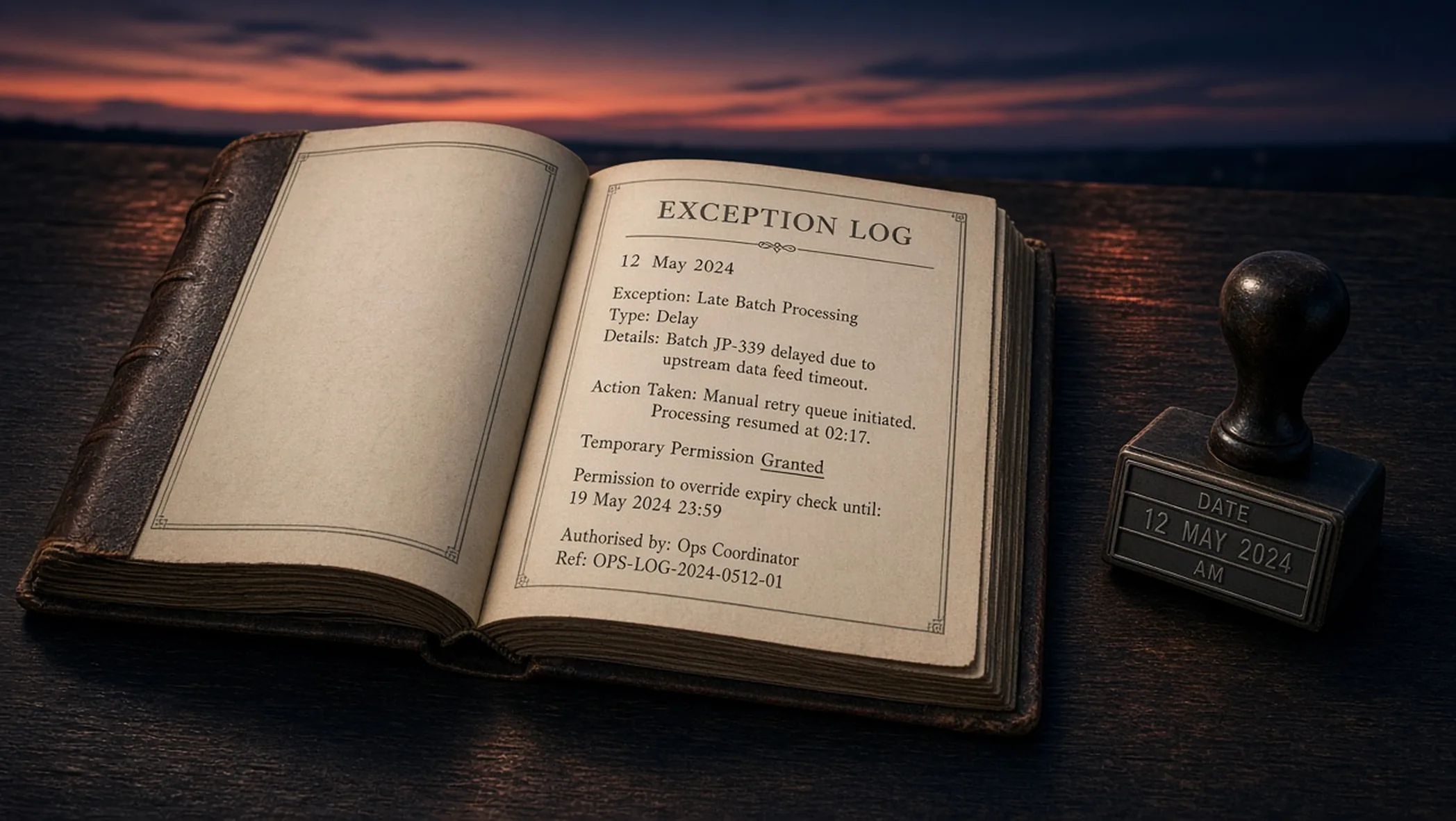
Someone will ask to break the system. A partner deck. A one-off ad. A booth template that cannot hold the lockup. Say yes without a date and that break stays. Six months later you have two color stories and nobody can remember which one is real. Write the reason, the surface, the expiry, and the person who takes it down. If you cannot fill those cells, the answer is no.
The single approver is already a cell on the brand brief. The rules they are allowing a break from live in guidelines people actually open. The meeting that names the approver is how we run a branding kickoff. Drift you find after the fact is the brand audit. A change to the color or type values themselves belongs with visual identity tokens, not in this log.
What an exception is
An exception is a dated permission to break one rule on one surface. The rule still stands everywhere else. The surface is specific: this deck, this ad, this event booth, this one landing page for this campaign. "Social" is too wide. "The website" is too wide. If you cannot point at the file, you are not describing an exception. You are describing a new look.
A reason is a constraint, not a mood. The vendor template cannot hold the wordmark. The publication requires a color you do not own. A legal line must appear at a size your template did not plan for. "The client asked" is not a reason until you write what they asked and why the standing rule cannot absorb it. "I prefer it" is not a reason. Taste goes to the guidelines review, not to a side door.
| Field | What good looks like | If you leave it blank |
|---|---|---|
| Rule | The non-negotiable you are breaking, named | You do not know what you bent |
| Reason | A constraint in one sentence | Taste sneaks in as policy |
| Surface | This deck, this ad, this booth | The break spreads to the next file |
| Approver | The one name from the brief | Anyone in the chat can say yes |
| Expiry | A calendar date | It is a new rule, or it is drift |
| Remover | A person who reverts the file on that date | The break outlives the campaign |
One approver
The brief already asks for one approver because committees produce beige. The log uses that same name. Commenters can argue. One person signs the row. If the approver wants a delegate for production breaks, write the delegate on the brief and the rule for escalation. A delegate who never escalates is a second approver. You just refused to admit it.
Approval happens before the file ships. A row written after the ad is live is a diary, not a control. The kickoff is where you agree that this name exists so the later meeting does not invent a new one under deadline. If the brief has no approver yet, you are not ready for exceptions. You are ready to finish the brief.
Keep the log where that person will see it: a short table next to the guidelines one-pager, not a buried sheet. Five open rows is a healthy log. Twenty-five open rows means the guidelines are wrong or the approver is saying yes to avoid a conversation. Either fix the rules or start saying no. The log is not a parking lot for courage.
Surface, expiry, and the person who removes it
Surface is the boundary. "This proposal for this prospect, sent on this date" can be a surface. "Proposals" cannot. The narrower the surface, the less damage a yes can do. When a team asks for a wide surface, split it or refuse it. Wide permission is how a campaign color becomes the website accent without anyone deciding that on purpose.
Expiry is a date on a calendar, not "after the campaign" and not "when we get to it." Campaigns slip. "When we get to it" means never. Pick the day the file should revert: the day after the event, the day the ad stops, the day the partner deck is no longer in use. Put that date in the row before you export the file.
No expiry means it is a new rule, not an exception. Say that sentence out loud when the date cell is empty. Then do one of two things. Update the one-pager, the template, and, if the value itself changed, the tokens. Or refuse the break. Leaving the row open is the third path, and it is the one that builds a second brand by accident.
The remover is a name, not a team. On the expiry date they archive the one-off file, restore the template, and mark the row closed. If that person is also the approver, fine, as long as the calendar reminder exists. If nobody is named, the file will still be in the folder next year. Someone will duplicate it because it is the one that "already worked."
- Write the row first: reason, surface, approver, expiry, remover. Then make the file. The other order is how you rationalize a deck that already shipped.
- One rule per row: if you are breaking color and lockup and voice, that is three rows or a new system. A bundle of breaks is a rebrand in a hurry.
- Close it in public: the remover notes the date closed. An open row past expiry is drift, even if the campaign felt small.
Failure mode: just this once
Failure mode: "just this once" becomes the second brand. It starts as a partner who wants their purple in the corner of one deck. The deck is useful, so someone duplicates it. The duplicate loses the note about the partner. A new hire finds it and treats it as the template. The website still uses your ink. Now you have two systems and a story about how you are "flexible." Flexibility without an expiry is drift. The audit will find it later. The log is how you avoid needing an audit to discover your own yes.
Watch for these shapes. A co-branded template with no end date. A campaign font that is still in the master file. An ad crop that became the social avatar. A "temporary" second logo in the email signature. Each one needed a row. Each one without a remover is now policy. Policy belongs on the one-pager, where you decide it on purpose, not in a folder of leftovers.
Do not use the log to dodge a hard no. If the break would stain the promise, confuse the buyer about who you are, or contradict a claim you already forbade, the approver refuses it. The log is for constraints, not for cowardice. A client who wants a different company can be told no. An event vendor who cannot fit the lockup can be given a dated crop.
A monthly pass
- Open rows: read every row still marked open. If the date has passed, the remover closes it this week or you record why the date moved. A moved date needs a new date, not a shrug.
- Repeated reasons: the same constraint three times is a guideline gap. Fix the template so the exception dies. Do not celebrate a busy log.
- Wide surfaces: if a row says "all social" or "the site," rewrite it narrower or promote it to a real rule. Wide rows are how the log eats the system.
- Orphan files: search the shared drive for the one-off. If it is still the file people duplicate, the remover has not finished. Archive it.
Limit: the log does not choose the brand, the name, or the tokens. It does not replace the brief, and it does not replace the one-pager. It governs the gap between the rule and a real constraint on a real file. If you want the gap to close forever, edit the rule. If you want the gap for a week, fill in the date.
Hypothetical, labeled
Hypothetical. A firm is sponsoring a partner conference. The booth vendor template cannot hold the wordmark at the clear space the guidelines require. The producer asks for a tighter crop and a second color the vendor already printed on the structure. The approver is the founder named on the brief. The row says: rule, lockup clear space and accent color. Reason, vendor template and a structure that is already built. Surface, that booth, that conference, not the website and not social next year. Expiry, the day after teardown. Remover, the producer, who archives the booth file and does not paste it into the sales theme. After that date the second color is gone. If they want it next year, that is a guideline change, not a renewal of "just this once."
What that example does not prove: that every sponsor booth should break clear space, or that a founder must personally archive files. It shows a yes with a boundary. The same request with no date, saved into the master deck, is the failure mode. That second file is a brand. It just never got a strategy meeting.
If exceptions are already living in chat and nobody can list them, write the log before you add another rule. Holding that list with the approver is part of branding when the system exists and the one-offs are winning. Contact when you want the yeses dated.
Frequently asked questions
What belongs in a brand exception log?
One row per break: the rule you are breaking, the reason, the surface (this deck, this ad, this booth), the approver, the expiry date, and the person who removes it. A preference, a new strategy, and a permanent color change do not belong in the log. Those are decisions, not exceptions.
Who is allowed to approve an exception?
One approver. The brand brief already asks for that name. Use the same person, or a delegate written on the brief who can reach them. A chat full of yeses is not approval. If three founders can each say yes, you do not have a log. You have three brands.
What if there is no expiry date?
Then it is not an exception. No expiry means you are writing a new rule. Put it on the guidelines one-pager, or refuse it. An open-ended "just this once" is how a one-off color becomes the second system.
Can we renew an exception?
Only by writing a new row with a new reason, a new surface, and a new date. Renewal is not a habit. If the same break comes back every quarter, change the rule or stop the break. A renewed exception with the same reason is a rule hiding in the log.
How is the log different from changing the guidelines?
The log is temporary and specific. Guidelines are the standing rules. A token or component change is a system edit, not a log row. If you want the break to last, update the one-pager and the files people actually open. Leaving it in the log forever means the log became the brand.