How to Choose the Growth Bottleneck Before You Pick a Channel
Ads, SEO, and a new site all fail if you diagnose the wrong constraint. Use the scorecard, then pick the bottleneck: offer, site, demand, sales, or capacity. Only then choose a channel.
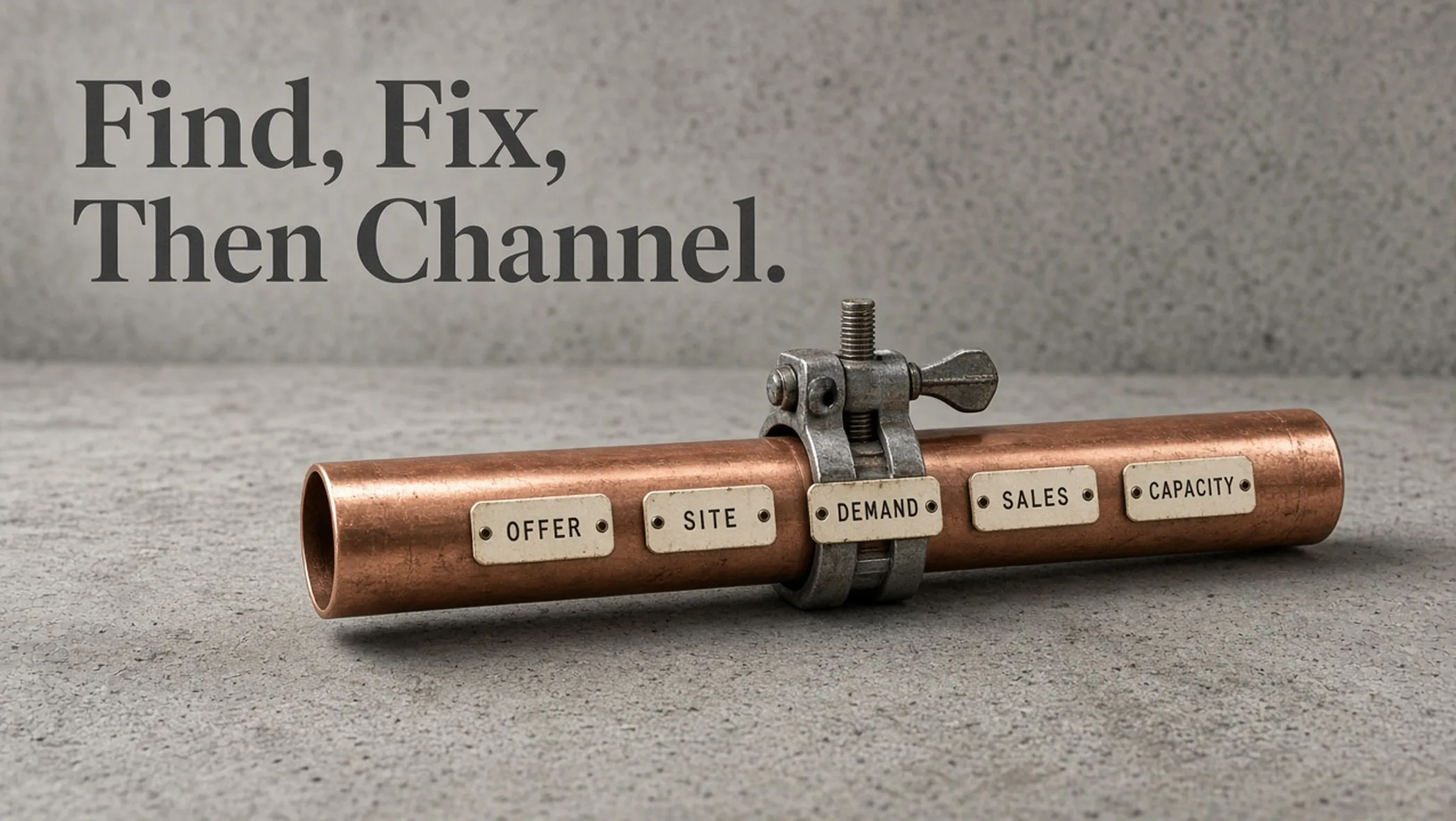
Channel talk is comforting because it sounds like a plan: “we need SEO,” “we need ads,” “we need LinkedIn.” Those are purchases. A bottleneck is a diagnosis. If you skip it, you will spend the quarter on the loudest vendor, not the tightest constraint.
Fill the service-business growth scorecard first. Then this page. Then a ninety-day sprint on one offer. The map is still the digital business growth guide.
Five constraints, one vote
flowchart LR
        O["Offer"] --> W["Site"]
        W --> D["Demand"]
        D --> S["Sales"]
        S --> C["Capacity"]
        C --> R["Revenue you can keep"]
Work left to right only as a story. Diagnose by asking which stage, if it stayed frozen, would still cap you. Capacity last in the drawing is often first in real life: you are already full and shopping for ads.
How to pick (use last month’s sheet, not a vibe)
| Bottleneck | You will see | Do not buy yet |
|---|---|---|
| Offer | Inquiries from people you cannot help, or nobody can repeat the who-line | A channel. Fix the sentence and the package. |
| Site | Traffic or referrals arrive, then bounce or submit mush; Google Analytics 4 (GA4) generate_lead is empty | More traffic. Fix the page and the form. |
| Demand | The offer is clear, the site is honest, and still almost no qualified conversations | A rebrand. You need a tap: search, partners, or outbound. |
| Sales | Qualified conversations exist; proposals lag; follow-up is a memory | More leads. You will drown in the same lag. |
| Capacity | You decline good work or slip dates | Demand gen. You will buy stress. |
Then, and only then, pick a channel
Demand is the only bottleneck that is allowed to start with a channel conversation. Even then, pick the tap that matches the buyer, not the tap a cousin likes.
- Search: when buyers already look for the job. Measure with Search Console clicks and qualified conversations, not average position. See SEO beyond rankings.
- Partners / referrals: when the work is trusted and the missing piece is introduction, not a billboard.
- Outbound: when the list is knowable and the offer is specific. Vague outbound is a tax on your reputation.
- Paid: when the landing page already converts a warm visitor. Paid on a mush page buys expensive confusion.
If the bottleneck is the site, the channel is not the homework. The homework is how to plan a website that grows the business.
Filled hypothetical: ads into a full calendar
Hypothetical. A studio runs ads because “we need more leads.” The scorecard shows they declined two fit clients last month and average start lag is five weeks. The bottleneck is capacity. Ads would buy a waitlist and angry first calls. The quarter’s job is a productized offer, a contractor, or a no. Not a campaign.
What this does not prove
Picking a bottleneck does not prove you will hit a number. It proves you stopped shopping for channels as entertainment. Re-vote next quarter with a new sheet. Do not defend last quarter’s diagnosis because the invoice already went out.
If you want a second read, send the five scorecard numbers, not a media plan. Start here.
Frequently asked questions
What is a growth bottleneck?
The constraint that, if it stayed the same, would still cap revenue even if every other part improved. If you cannot take more work, ads are not the bottleneck. If nobody who can buy understands the offer, a new channel will only scale confusion.
Why not pick SEO or ads first?
A channel is a tap. The bottleneck is the pipe. Opening a tap into a blocked pipe makes a mess, then a story about “marketing did not work.” Diagnose with the scorecard, then pick the tap.
Can there be two bottlenecks?
There can be two pains. There is one you will work this quarter. If you pick two, you will finish neither. The ninety-day sprint exists to force one offer and one constraint.
Is a bad website always the bottleneck?
No. A site can be ugly and still convert if the offer is clear and demand is inbound. A site can be beautiful and still convert nobody if the who-line is mush. Use inquiry quality and close rate, not taste.
What if demand is fine and we still miss revenue?
Then look at sales (time to first reply, who qualifies, proposal lag) or capacity (you cannot staff the work). More traffic will make both worse.
How do I know the diagnosis is right?
After four weeks, the scorecard number tied to that constraint should move. If it does not, you picked a vanity project. Change the bottleneck, not the slogan.